
Bitcoin Shows New Resilience as Stocks Retreat and Volatility Stays Subdued


Key Takeaways
- Bitcoin rose 4.4% to $65,000 as softer US inflation lifted crypto sentiment.
- Crypto gained 1.7% as the Nasdaq fell 2.9%, signaling a brief break from U.S. equities.
- Deribit volatility stayed near 1-year lows, but $51.12B futures leverage raises breakout risk.
Traders Price 75% Odds of a Fed Hold as Yields Near 4.60% and Crypto Stays Firm
The crypto market showed an unusual degree of independence this week, gaining while US stocks retreated under pressure from geopolitical risk and a selloff in chipmakers. According to data from DWF Labs, total digital asset market value rose 1.7% to $2.31 trillion. By comparison, the S&P 500 fell 1.6%, while the Nasdaq Composite lost 2.9%.
Bitcoin jumped 4.4% to about $65,000 after June inflation came in below expectations. It later slipped toward $62,000 as tensions between the US and Iran intensified, before recovering to back to $65,011 as of July 23, 10:15 EDT.
Ether followed a similar path. It climbed from $1,774 to $1,890 after the inflation report, then advanced to about $1,900.
Sentiment also improved after the White House approved an ethics compromise tied to the CLARITY Act. The agreement removed a months-long obstacle and opened a potential route for the crypto market structure bill through the Senate.
Oil Markets Signal Lingering Caution
Traditional markets appeared encouraged by hopes of peace talks, but oil trading told a more guarded story.
Brent crude surged to $90.70 a barrel as the conflict disrupted traffic through the Strait of Hormuz. It later eased into the mid-$80s. Prices remain below May’s $114 peak but well above the $71 level seen at the start of July.
Funding on Hyperliquid’s WTI oil perpetual contract briefly reached an annualized 184% as traders rushed into long positions. Oil volatility was also about 3.2 times higher than equity volatility. Together, those signals suggest energy traders are not fully convinced that the conflict will cool.
The inflation threat pushed the 10-year Treasury yield toward 4.60% and lifted the dollar index near 101. Markets assigned roughly a 75% chance that the Federal Reserve would hold rates at its July 29 meeting.
Bitcoin Leverage Builds Without Reaching Extremes
Bitcoin volatility remained close to one-year lows despite the macro shock. Deribit’s DVOL readings stayed near the bottom of their annual range, even as equity and bond volatility increased.
Such compression rarely lasts. A sharp move may follow if macro conditions shift again.
Positioning is growing, but it does not yet appear overheated. Bitcoin futures open interest rose 3.4% to $51.12 billion. Long positions increased to 52.1% of the market, while Binance funding averaged about 9% annualized.
ETF demand also improved. U.S. spot bitcoin funds recorded seven consecutive trading days of inflows through July 22, their strongest streak since early May. Cumulative net flows reached $51.8 billion. Ether funds attracted $196 million over the same period, lifting total net inflows to $11.2 billion.
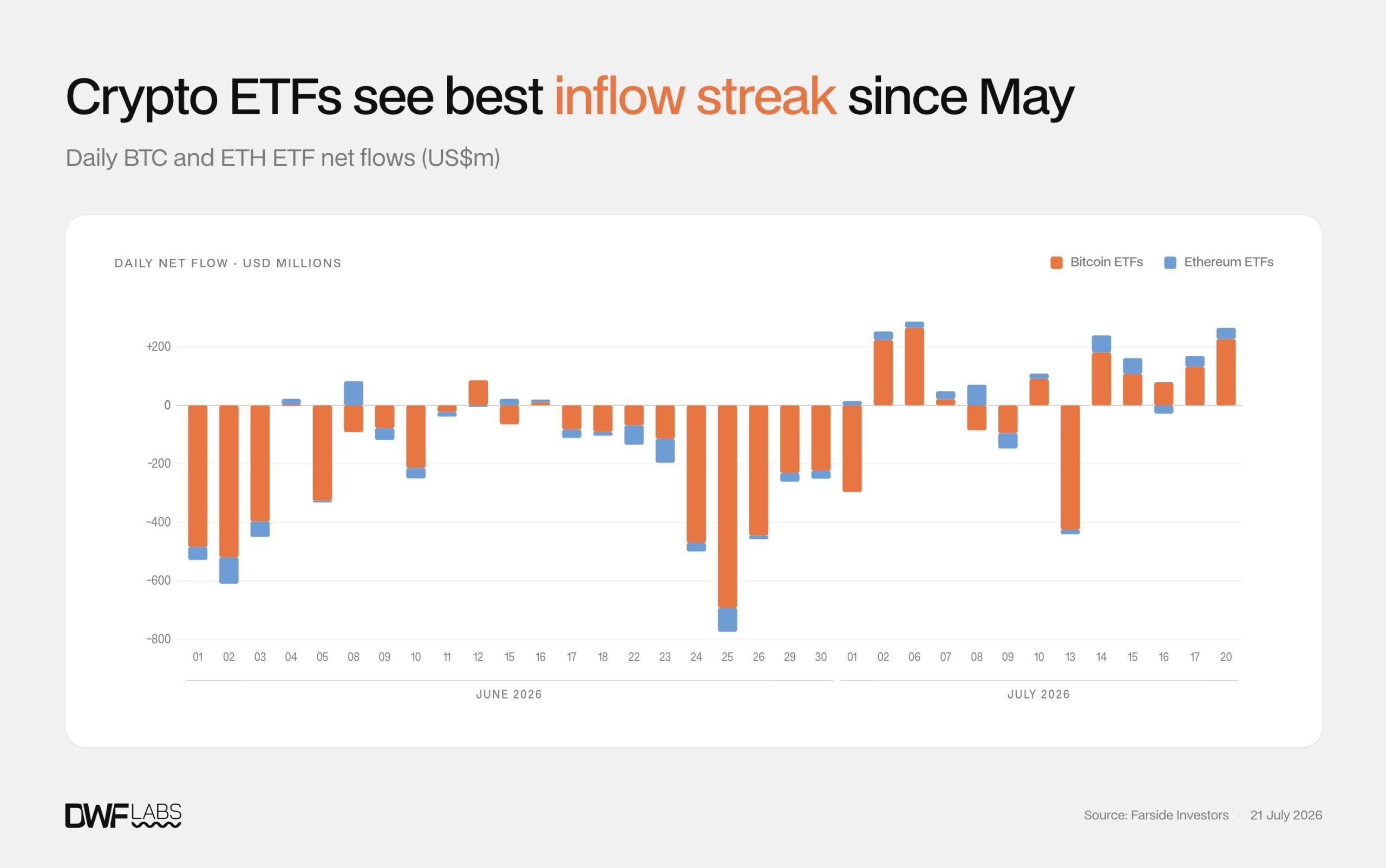
Crypto’s resilience is encouraging. Still, one strong week is not enough to establish a lasting break from traditional markets.
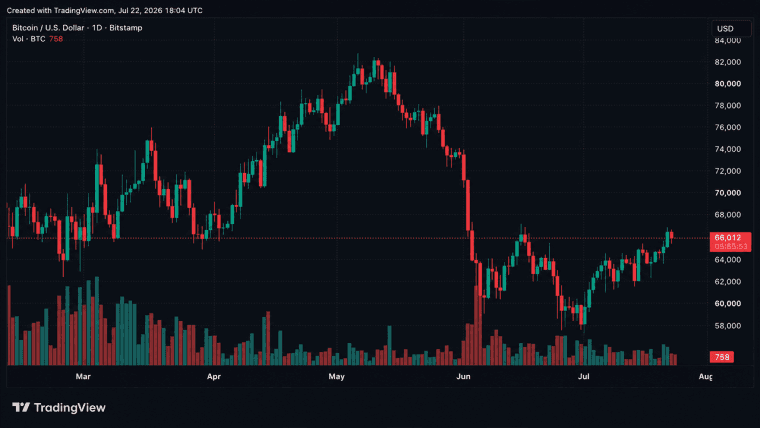
Senate Republicans Push CLARITY Act With 15 Days Left as Bitcoin Struggles Near $66K
Bitcoin struggled to hold $66,000 on Wednesday, trading near $66,200 after bouncing between a low of $65,536 and a peak…

Senate Republicans Push CLARITY Act With 15 Days Left as Bitcoin Struggles Near $66K
Bitcoin struggled to hold $66,000 on Wednesday, trading near $66,200 after bouncing between a low of $65,536 and a peak…
Senate Republicans Push CLARITY Act With 15 Days Left as Bitcoin Struggles Near $66K
Bitcoin struggled to hold $66,000 on Wednesday, trading near $66,200 after bouncing between a low of $65,536 and a peak…


Comments are closed.